- by Deepa Krishnan
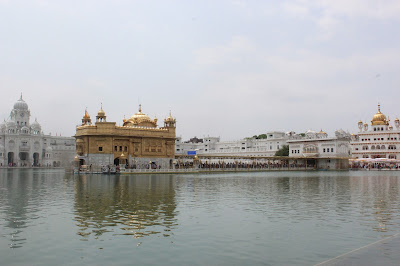 At the heart of Amritsar is the most sacred tank of the Sikh faith; the Amrit Sarovar. This is the tank from which the city of Amritsar gets its name. In the centre of the sacred water tank is the golden temple.
The tank was excavated in the late 16th century / early 17th century, on land that was already considered to be sacred. The work was done by devotees.
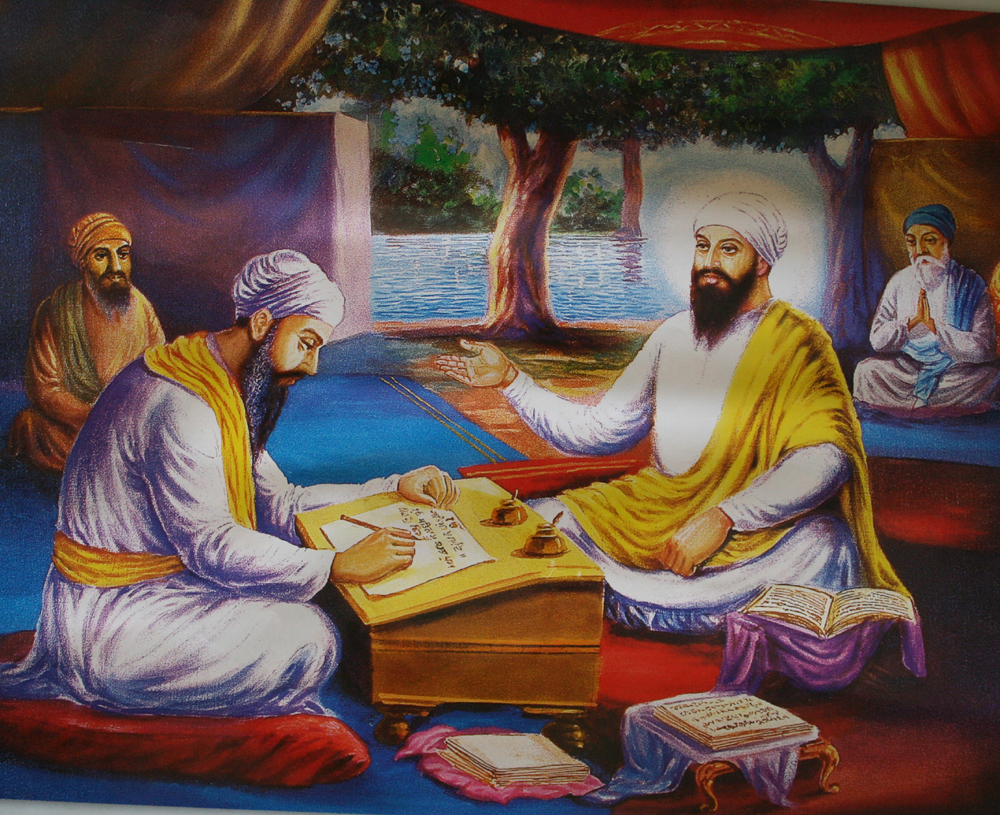
Before the large tank was excavated, the site was a low-lying area with a small pond, surrounded by a large number of shady trees. Guru Ram Das, the fourth guru of Sikhs, had been searching for a place to establish a new Sikh centre. Although Guru Ram Das began the construction of the tank and temple on this land, it was completed by his son, Guru Arjan.
 There are many legends about the land on which the Amrit Sarovar has been excavated.
One legend is about the Amrit Kund (Spring of Nectar). Mentioned in the Puranas and the Hindu epic Ramayana, the Amrit Kund is believed to have been an ancient place of worship that lost its importance due to the rise of Buddhism.
Another story is of Guru Amar Das (the third guru), who found near the pond a herb to cure the skin ailment of Guru Angad (the second Guru). Yet another local story is of Rajni, whose husband was cured of leprosy after taking a dip in the pond.
Whenever you visit the golden temple, you will see pilgrims take a sacred dip in the Amrit Sarovar. It is believed to be the holiest of experiences.
But Amrit Sarovar is not the only sacred tank in Amritsar. You can do a pilgrimage walk, the "Panj Sarovar Yatra", covering 5 important tanks, including Amrit Sarovar.
The other four tanks are:

Please write to deepa@magictoursofindia.com if you want more information about the Panj Sarovar pilgrimage.We would be happy to explain the sites and the sequence.

The tank was excavated in the late 16th century / early 17th century, on land that was already considered to be sacred. The work was done by devotees.
Before the large tank was excavated, the site was a low-lying area with a small pond, surrounded by a large number of shady trees. Guru Ram Das, the fourth guru of Sikhs, had been searching for a place to establish a new Sikh centre. Although Guru Ram Das began the construction of the tank and temple on this land, it was completed by his son, Guru Arjan.
 There are many legends about the land on which the Amrit Sarovar has been excavated.
One legend is about the Amrit Kund (Spring of Nectar). Mentioned in the Puranas and the Hindu epic Ramayana, the Amrit Kund is believed to have been an ancient place of worship that lost its importance due to the rise of Buddhism.
Another story is of Guru Amar Das (the third guru), who found near the pond a herb to cure the skin ailment of Guru Angad (the second Guru). Yet another local story is of Rajni, whose husband was cured of leprosy after taking a dip in the pond.
Whenever you visit the golden temple, you will see pilgrims take a sacred dip in the Amrit Sarovar. It is believed to be the holiest of experiences.
But Amrit Sarovar is not the only sacred tank in Amritsar. You can do a pilgrimage walk, the "Panj Sarovar Yatra", covering 5 important tanks, including Amrit Sarovar.
The other four tanks are:

- Gurudwara Shri Santoksar Sahib - the oldest sacred tank in Amritsar, and said to be the first sarovar in Sikh history
- Gurudwara Shri Ramsar Sahib - the smallest of the five sarovars, marking the spot where the Guru Granth Sahib took form
- Gurudwara Shri Bibeksar Sahib - the sarovar built by the sixth guru, who introduced martial arts and weapons
- Gurudwara Mata Kaulsar Sahib - named after a holy lady who was the follower of the sixth guru
Please write to deepa@magictoursofindia.com if you want more information about the Panj Sarovar pilgrimage.We would be happy to explain the sites and the sequence.